
Dental Implants Alexandria
Unmatched Results from a Highly Trained Expert

Dr. Mazhari is recognized as one of the top dentists in the world due to all of the advanced, specialized training she has completed at renowned institutions like the Las Vegas Institute for Advanced Dental Studies. Her extensive knowledge, skills, and hands-on experience allow her to offer several variations of the dental implant treatment all under one convenient roof. Stick with a team you know and trust throughout your entire process and schedule a consultation with our dental implant dentist today.
Why Choose Alexandria Dental Health & Smile Studio for Dental Implants?
- Dentist is a Fellow of the Renowned Las Vegas Institute
- Recognized as Part of the Top 1% of Dentists in the World
- Advanced Diagnostic Imaging for Precise Treatment Planning
What Are Dental Implants?
Dental implants are small titanium posts that are shaped like screws. They’re surgically placed below the gumline to restore the missing root structure of teeth, and due to their biocompatible nature, they’re able to fuse with the jawbone. This allows them to provide the bone with stimulation and blood flow that keeps it from eroding over time as well as offering a stable foundation for any type of restoration to be attached to.
Meet Your Implant Dentist, Dr. Mazhari
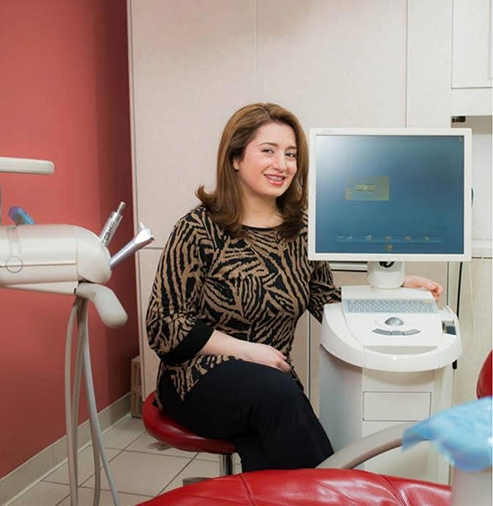
Dr. Mojgan Mazhari is a highly skilled practitioner decades of experience in advanced dental procedures, including implants. She is an LVI Fellow and therefore continuously furthers her education to stay at the forefront of dental innovations. Dr. Mazhari is known for her gentle approach and dedication to delivering exceptional results. Plus, she uses the latest technology and techniques to achieve the best possible outcomes.
The Expert Care Your Smile Deserves

We understand that implants can feel daunting, but the process can be made simple with the right team. Dr. Mazhari values each patient who comes to visit, even if it is simply for a consultation.
Our dental office is located in Alexandria, conveniently beside several freeways and within driving distance of DC. We invite you to learn more about our team and our office by contacting us today.
The 4-Step Dental Implant Process
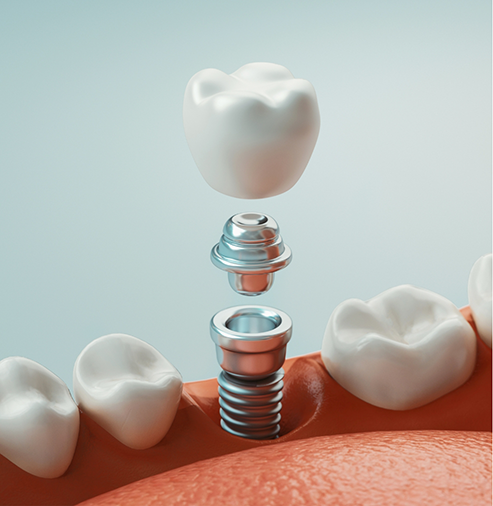
The dental implant process varies a bit by patient, but a few points can be said in advance. One is that the treatment timeline is lengthy; you’ll have to wait four to six months for your posts. Next, implants are well worth the time and effort to get them! Dr. Mazhari is an outstanding oral surgeon, so your treatment will benefit from her immense expertise and skill. Under her supervision, you’ll undergo the four key steps of the implant process: consultation, surgery, osseointegration, and final placement.
Initial Dental Implant Consultation
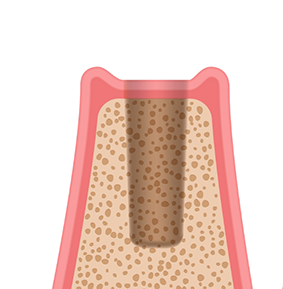
You’ll start things off by having a consultation with Dr. Mazhari. Through this discussion, she (and the rest of our team) will confirm your treatment goals, current oral health status, and other relevant details. We’ll use this feedback to determine whether dental implants suit your needs and to draft an appropriate treatment plan.
Rest assured, you needn’t worry if you don’t qualify for implants. We can provide the preliminary services – tooth extraction, gum disease therapy, etc. – that’d make you a good candidate later. Through such dental work, you’d have a mouth (and jaw) strong enough to support implant posts.
Dental Implant Surgery
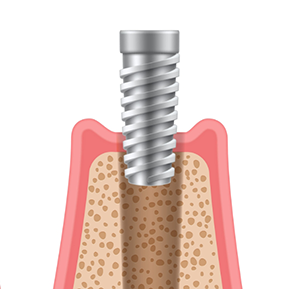
With our approval, the consultation will give way to dental implant surgery. Dr. Mazhari herself handles this second treatment phase, as her education and skills put her at the forefront of dental innovation. You can trust her to provide truly excellent implants that look and feel great!
Overall, the implant surgery will involve the following:
- Anesthesia – Before surgery starts, Dr. Mazhari will numb your mouth with anesthesia. Doing so keeps the treatment process from hurting; you’ll have ache-free care.
- Incision(s) – Dr. Mazhari will make a gum incision once the anesthesia “kicks in.” That way, there will be room in your mouth for the actual implant post.
- Implant Placement – Using advanced tools and methods, Dr. Mazhari will place your implant precisely and carefully. That means your new tooth will be highly effective!
- Gum Closure – Dr. Mazhari will close your gum incision after placing the implant. Once she’s done so, she’ll set a cap over the post.
Dental Implant Osseointegration & Abutment

Following the surgery, your placed implant will start fusing with your jawbone. This process of “osseointegration” takes roughly 4-6 months and stabilizes your post. To that extent, it ensures your new “tooth” becomes a permanent part of your mouth.
You’ll return for a follow-up surgery after your implant fully fuses. At that time, Dr. Mazhari will place an abutment – a small metal connector – over your base post. A dental lab will craft your final restoration while you recover from said placement.
Delivery of Dental Implant Restoration(s)
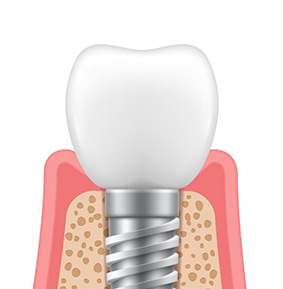
To conclude the implant process, Dr. Mazhari will set your final restoration over your implant post. The nature of this device can vary; what you get will depend on how many teeth you lost. Indeed, the restoration could be a dental crown, implant bridge, or even an implant denture.
Fitting the final restoration won’t take long, regardless of its type. Our team only has to apply some dental cement to your abutment, set the device, and make final adjustments. From there, you’ll be ready to enjoy your restored smile!
Benefits of Dental Implants

Although dental implants typically require a greater commitment of both time and money upfront, many of the long-term benefits outweigh the cost of investment. Dental implants can give you a natural-looking smile that boosts your confidence and allows for the best possible quality of life. Here are some of the key benefits of dental implants:
Day-to-Day Benefits

- Natural Appearance:Dental implants look and feel like natural teeth, blending seamlessly with your smile.
- Improved Functionality:Unlike traditional dentures and dental bridges, implants restore full chewing power, allowing you to eat your favorite foods without restriction. You will once again be able to eat a varied, healthy diet and chew comfortably without worry.
- Easy Maintenance & Daily Care: No need for dental adhesives like dentures, and you can care for dental implants just with regular good dental hygiene.
- Confidence in a Stable Smile: You will feel assured and at ease knowing that your natural teeth and dental implants will stay put throughout your day-to-day life.
Health Benefits

- Bone Preservation:Dental implants help maintain jawbone density and prevent further bone loss, a common issue with missing teeth.
- Lessened Damage To Adjacent Natural Teeth: Alternative tooth replacement options rely on the strength and durability of the remaining natural teeth, while dental implants are fully self-supporting.
- Increased Stability of Your Overall Dental Health: Completing your smile with dental implants will help stabilize your dental arch and stop jawbone deterioration, which in turn will help prevent further tooth loss.
Long-Term Benefits
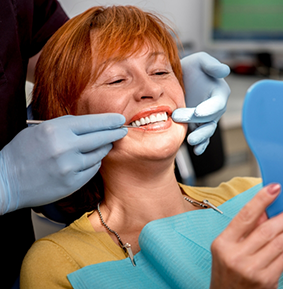
- Long-Term Durability:Implants are designed to last many years with proper care, making them a durable and cost-effective option.
- Improved Quality of Life: Implants allow you to eat, speak, and smile confidently, improving your function and appearance.
Who Dental Implants Can Help
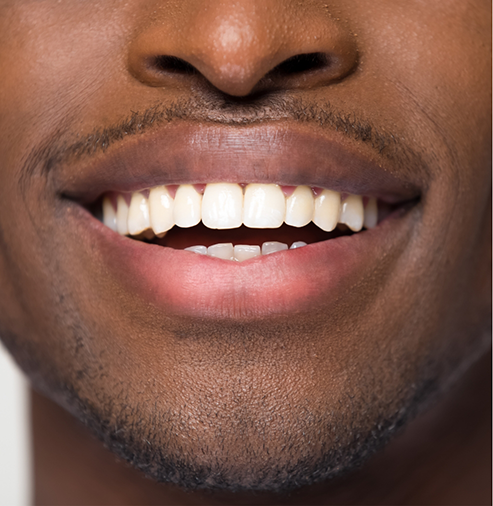
Candidates for dental implants are those who have one or more missing or severely damaged teeth in need of replacement. They are often considered the ideal tooth replacement option due to their ability to replicate the entirety of the tooth structure, including the root.
However, there are a few circumstances that may impact your candidacy for a dental implant, including smoking, significant bone deterioration, and certain diseases like diabetes, which can adversely impact the immune system.
During a consultation, Dr. Mazhari will examine your oral health, medical history, and lifestyle to determine your candidacy for dental implants. In some cases, she may recommend an additional procedure before the implant treatment, such as a bone graft, to increase the likelihood of success. In general, dental implants are an excellent option for patients missing a single tooth, multiple teeth, or an entire row.
Missing a Single Tooth
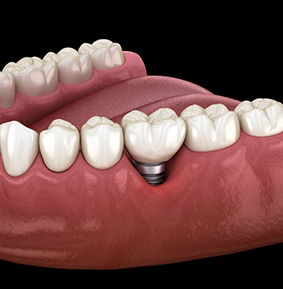
Single tooth dental implants, or single implant-supported crowns, are designed to replace individual missing or damaged teeth. This form of restoration is the closest thing to a natural tooth, as it replaces every part of the tooth structure, including the root.
The titanium “root” of the implant has the added benefit of stimulating the jawbone and preventing further decay and damage to surrounding teeth. A dental implant will look, feel, and function exactly like a natural tooth. In fact, most patients have reported their final crown feeling better than their own teeth.
Missing Multiple Teeth
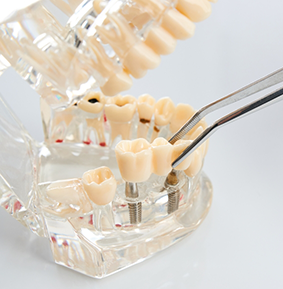
In cases where a patient is missing multiple teeth in a row, an alternative form of implant restoration can be employed in which a few implant posts are used to support a series—or “bridge”—of crowns. This is called an implant bridge.
Dr. Mazhari will carefully evaluate your oral health and the structure of your jawbone to best determine how many individual implants will be needed to adequately support the row(s) of custom crowns. Using our advanced imaging technology, she will then strategically place the implants for optimal security, comfort, function, and aesthetics.
Missing All Teeth
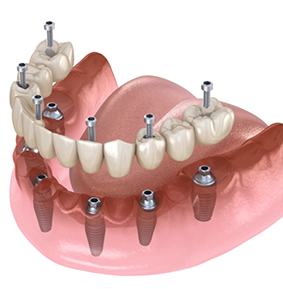
If you are missing all or most of your teeth on one or both dental arches, it may indeed be possible to restore your full smile with implant-supported dentures. Full-mouth cases usually require four to six titanium implants per arch, which are used to anchor a denture.
Using our advanced imaging technology, Dr. Mazhari will strategically place the implants for optimal comfort and stability. Once the implants have successfully fused with the jawbone, the custom dental prosthesis will be firmly affixed onto the implant base for a secure, functional, and natural-looking result.
Missing All Teeth with Low Jawbone Density
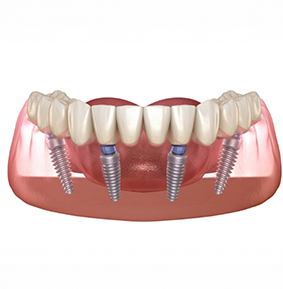
There are numerous options available for full mouth cases, including for people who have been without teeth for a long time. If, after years of wearing traditional removable dentures, your jawbone has atrophied (deteriorated) too much for dental implants to be supported, there are still options, like All-On-4 dental implants.
All-On-4 dental implants are designed to work with less jawbone and can often help people who are not able to get regular dental implants. Smaller or angled implants from Dr. Mazhari can solve problems with placement for many patients.
Learn More About All-On-4 Dental Implants
How Much Do Dental Implants Cost?
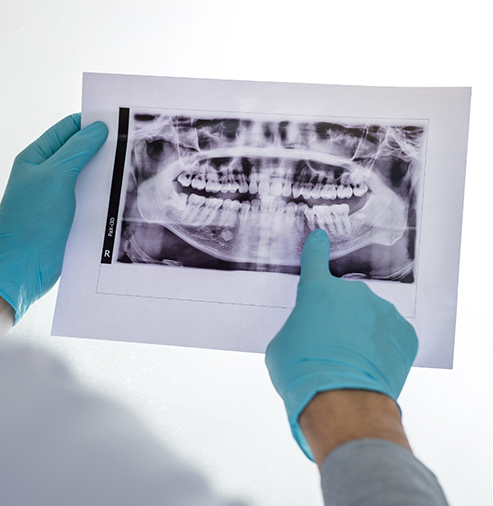
The cost of dental implants will depend on your individual tooth loss situation. Dr. Mazhari will examine your X-rays and mouth to determine a number of cost-determining factors of your treatment plan, like how many implants you need and what type of restoration you’ll require. Based on these details, our team will be able to provide you with a cost estimate and walk you through all of your payment options.
Cost Factors for Dental Implants

The total cost of dental implants can vary significantly depending on numerous factors, including the amount of preparation needed to prepare the implant site(s), the number of implants being placed, the type of restoration chosen, and whether or not bone grafting is necessary.
That said, the cost of treatment typically ranges between $1,600 and $2,600 for the implant and abutment, and between $1,600 and $2,600 for the crown/restoration. The total cost for a single tooth implant is typically around $5,000.
The Physical & Emotional Value of Investing in Implants
Dental implants are permanent, easy to take care of, and designed to look and function just like natural
teeth—but many patients are wary of the perceived cost. Indeed, since dental implants require surgery and
custom fabrication, the upfront costs often appear significantly higher than those for a fixed dental bridge,
denture, or other restoration option.
However, the lifetime value of dental implants can more than make up for this discrepancy. As a permanent tooth replacement option, the lifetime maintenance fees associated with dental implants are often much lower than those of dentures or other removable appliances. They also have the advantage of requiring only basic oral hygiene care, as opposed to the complex array of cleaning, sanitizing, and adhering solutions used for other restorations.
Financing Options Available for Dental Implants
In addition to the long-term financial benefits of implants, our practice also offers financing options to help make them more affordable. We
partner with many trusted national healthcare lenders to make dental implants attainable for nearly any budget.
Our financial partners can help qualified applicants set up a payment plan that suits their needs, ensuring that high-quality dental solutions are available to as many patients as possible.
Advanced Dental Implant Technology

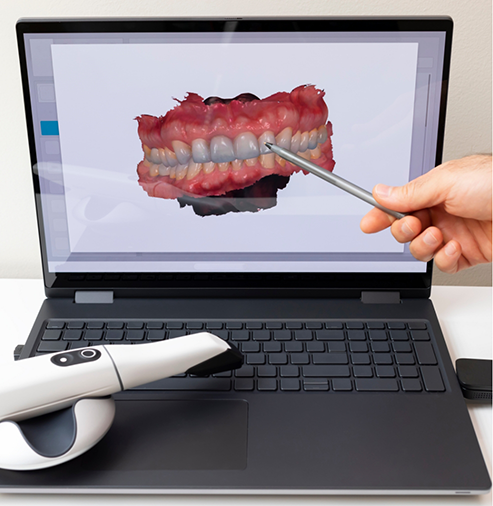
We embrace minimally invasive technology for implants, offering each visitor a comfortable experience, free of dental anxiety or intensive surgeries. Our technology, such as our iTero scanners, helps us see small details and plan a placement that is exactly where it needs to be.
We utilize CT scans, 3D treatment planning, and a surgical guide to know the direction, size, and angulation of the implant. This helps us know the best way to treat your needs in advance of the surgical date.
Advancements in Dental Imaging
The iTero scanner is an innovative tool that utilizes advanced technology to generate digital dental
impressions. This allows our team to accurately map out the treatment plan for each patient’s new smile.
With CEREC Primescan, our team uses intuitive AI (artificial intelligence) to create detailed scans of our patients’ teeth. Both of these devices eliminate the need for traditional putties and pastes to map out your smile.
Additionally, using iTero and CEREC Primescan can reduce the amount of time it takes to create a precise impression of your smile, which can speed up the entire process of receiving dental implants.
Furthermore, the advanced imaging technology and digital impressions technique using CEREC 3D Primescan enable us to accurately plan, design, and place the implants for the most comfortable and satisfactory results possible.
Recovering from Dental Implant Surgery

Because dental implant surgery will be different for each patient, the recovery will vary from person to person. The length of recovery will be impacted by the number of implants, the type of implant, and the overall work needed to meet their needs.
Patients typically experience some form of discomfort that may include swelling and bleeding, but this should subside over time. Furthermore, pain medication can typically aid in addressing any swelling and discomfort.
Generally speaking, the recovery from dental implant surgery can last between 3 and 6 months. However, patients should be able to return to work within 1–2 days of surgery.
Maintaining & Caring for Your Dental Implants
Caring for your dental implants and the attached restorations is key to extending the longevity of your results and improving your oral hygiene. Dental implants are designed to feel and look natural while mimicking the function of regular teeth. Keeping up with brushing, flossing, and routine dental exams is crucial for the upkeep of your dental implants.
Getting Started with Dental Implants
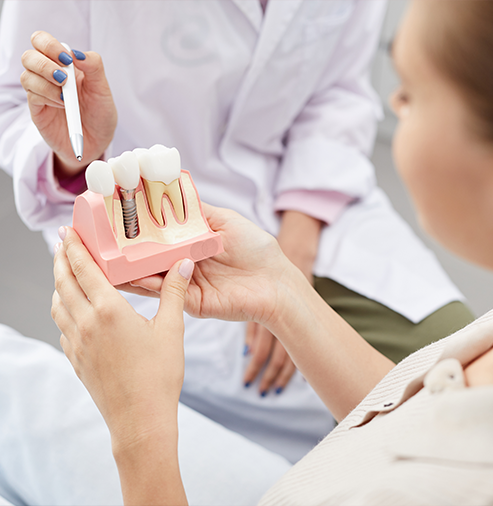
If you are interested in learning more about dental implants as a tooth replacement option, we invite you to contact us today. Our friendly and knowledgeable staff are happy to answer any questions you may have or help you schedule a consultation with Dr. Mazhari.
Dental Implant FAQs
How Long Do Dental Implants Last?
The physical titanium post that makes up the dental implant is likely to last for a lifetime, as it fuses with the surrounding bone within the jaw. While the dental appliance on the surface level (such as a dental crown) will likely need to be replaced over time, the actual dental implant should not endure the same wear and tear.
Dental implants are used to secure dental restorations in place and can provide increased stability and functionality. Proper maintenance and oral care can also contribute to the overall longevity of dental implants.
How Soon Can I Get Dental Implants After a Tooth Extraction?
If Dr. Mazhari is doing the initial tooth extraction, she generally recommends waiting about 2–3 months after the extraction before placing the permanent implant. She will place a temporary tooth on the day of the extraction to give patients greater comfort and aesthetic peace of mind as well as to keep the space open and prevent bite change or collapse over 4–8 months.
The two-month waiting period encompasses the average amount of time that it takes for the jawbone to grow back where the extracted tooth root used to be. In cases where a patient has low jawbone density, Dr. Mazhari may recommend patients undergo a bone grafting procedure to ensure a higher likelihood of implant success.
What Are Alternative Treatments to Dental Implants?
If dental implants are not right for you or you are not an ideal candidate, some alternatives can produce similar results.
Traditionally, dentures were the ideal solution for patients who needed to address missing or damaged teeth in most or all of a dental arch. Dental implants require a certain amount of jawbone density, so dentures may still be a better option if you lack the required amount.
Dental bridges can also be a great alternative for those who are not suited for dental implants and only need to address one or a few missing teeth. They can fill the gap left by a missing tooth (or consecutive teeth) by attaching to the two surrounding teeth on either side.