
Onlays, Inlays, & Partial Crowns – Alexandria
Restore the Structure of Your Smile

Tooth enamel is the strongest substance in the entire body, but it isn’t completely resilient to tooth decay and damage. In some situations, fillings and dental crowns can help to rebuild and protect damaged teeth from additional harm. However, in other situations, and inlay, onlay, or partial crown may be the ideal solution to restore the structure of your smile and provide long-lasting results. To find out if this is the right option for you, give us a call to schedule your next visit.
Why Choose Alexandria Dental Health & Smile Studio for Onlays, Inlays, & Partial Crowns?
- Made From Natural-Looking Materials
- Flexible Financing Options Available
- We Welcome Dental Insurance
What Are Partial Crowns?
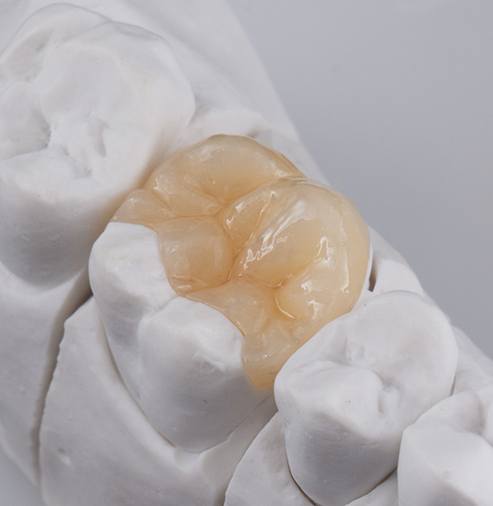
You are likely familiar with a dental crown which is a customized cap that is designed to cover the entire chewing surface of a compromised tooth. They are great for teeth that have experienced extensive damage and need some extra protection and structural support. Alternatively, partial dental crowns are designed to restore damaged teeth without altering most of the tooth’s structure. They are used when a simple filling isn’t sufficient, but a full crown isn’t necessary. There are two types of partial crowns: onlays and inlays. Here’s how they work.
What Are Onlays?
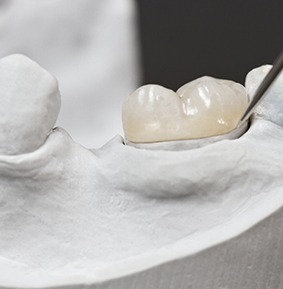
While an onlay also treats decay, it restores the cusp, or raised surface, of a tooth. This procedure is a better alternative to a filling under the pressure of chewing. An onlay will strengthen the tooth overall by recreating the cusps and spaces between them.
What Are Inlays?
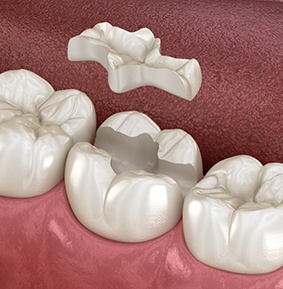
An inlay is a customized restoration that is molded and fitted onto the chewing surface of a tooth that has suffered damage. By using an impression of your mouth, we can create an inlay that fits perfectly in your tooth.
Which Restorative Option Is the Right Choice for You?

We will recommend onlays or inlays when you still have enough healthy tooth structure remaining to support the restoration. This way, more of your healthy enamel can be preserved. However, a dental crown is recommended when the tooth is too damaged and needs full coverage to remain in good condition. Other factors, such as whether the tooth is in the back or front of the mouth, bite force needed, and the risk of fracture, are all considered as well.